Kieslowski is a genius.

Film poster
The initial conditions of our Universe can be summarized on a single sheet of paper. Yet the Universe is full of complex structures today, such as stars, galaxies and groups of galaxies. In this review I describe the standard theoretical model for how complexity emerged from the simple initial state of the Universe at early cosmic times through the action of gravity. In order to test and inform the related theoretical calculations, large-aperture telescopes and arrays of radio antennae are currently being designed and constructed. The actual transition from simplicity to complexity has not been observed as of yet. The simple initial conditions were already traced in maps of the microwave background radiation, but the challenge of detecting the first generation of galaxies defines one of the exciting frontiers in the future of cosmology. Once at hand, the missing images of the infant Universe might potentially surprise us and revise our current ideas.

Geckos are nature's elite climbers. Their remarkable climbing feats have been attributed to specialized feet with hairy toes that uncurl and peel in milliseconds. Here, we report that the secret to the gecko's arboreal acrobatics includes an active tail. We examine the tail's role during rapid climbing, aerial descent, and gliding. We show that a gecko's tail functions as an emergency fifth leg to prevent falling during rapid climbing. A response initiated by slipping causes the tail tip to push against the vertical surface, thereby preventing pitch-back of the head and upper body. When pitch-back cannot be prevented, geckos avoid falling by placing their tail in a posture similar to a bicycle's kickstand. Should a gecko fall with its back to the ground, a swing of its tail induces the most rapid, zero-angular momentum air-righting response yet measured. Once righted to a sprawled gliding posture, circular tail movements control yaw and pitch as the gecko descends. Our results suggest that large, active tails can function as effective control appendages. These results have provided biological inspiration for the design of an active tail on a climbing robot, and we anticipate their use in small, unmanned gliding vehicles and multisegment spacecraft.
We document male-biased sex ratios among U.S.-born children of Chinese, Korean, and Asian Indian parents in the 2000 U.S. Census. This male bias is particularly evident for third children: If there was no previous son, sons outnumbered daughters by 50%. By contrast, the sex ratios of eldest and younger children with an older brother were both within the range of the biologically normal, as were White offspring sex ratios (irrespective of the elder siblings' sex). We interpret the found deviation in favor of sons to be evidence of sex selection, most likely at the prenatal stage

Atmospheric consequences of nuclear exchange Nuclear winter has been hypothesized to dramatically alter the Earth's climate. Michael Mills et al. have studied ozone depletion as a result of regional nuclear war, developing a computational model that links climate to atmospheric chemistry, and conducting 10-year simulations. The fires that would result from a total exchange of 100 Hiroshima-equivalent nuclear devices (yield 15 kilotons) would generate 5 million tonnes of soot that firestorms and solar heating would loft into the stratosphere. At altitudes up to 60 km, the soot would absorb solar radiation and heat surrounding gases, thus increasing the rate constants for several reactions that break down ozone. The authors found that two chemical reactions in particular would dominate alterations in ozone after a nuclear war: (i) the Chapman cycle, in which an oxygen free radical and ozone combine to form two diatomic molecules; and (ii) a coupled pair of reactions catalyzed by NO and NO2 that similarly produces diatomic oxygen. In the year after a nuclear war, the Chapman cycle would account for the greatest ozone loss, but NOx catalysis would then become dominant and persist for several more years. Mills et al.'s model predicts that the net result in both hemispheres would be an ozone hole extending from 20° north or south latitude to the poles. — K.M.
We use a chemistry-climate model and new estimates of smoke produced by fires in contemporary cities to calculate the impact on stratospheric ozone of a regional nuclear war between developing nuclear states involving 100 Hiroshima-size bombs exploded in cities in the northern subtropics. We find column ozone losses in excess of 20% globally, 25–45% at midlatitudes, and 50–70% at northern high latitudes persisting for 5 years, with substantial losses continuing for 5 additional years. Column ozone amounts remain near or <220 Dobson units at all latitudes even after three years, constituting an extratropical "ozone hole." The resulting increases in UV radiation could impact the biota significantly, including serious consequences for human health. The primary cause for the dramatic and persistent ozone depletion is heating of the stratosphere by smoke, which strongly absorbs solar radiation. The smoke-laden air rises to the upper stratosphere, where removal mechanisms are slow, so that much of the stratosphere is ultimately heated by the localized smoke injections. Higher stratospheric temperatures accelerate catalytic reaction cycles, particularly those of odd-nitrogen, which destroy ozone. In addition, the strong convection created by rising smoke plumes alters the stratospheric circulation, redistributing ozone and the sources of ozone-depleting gases, including N2O and chlorofluorocarbons. The ozone losses predicted here are significantly greater than previous "nuclear winter/UV spring" calculations, which did not adequately represent stratospheric plume rise. Our results point to previously unrecognized mechanisms for stratospheric ozone depletion.
The experiments yielded one evolution in which Mercury falls onto the Sun at ~1.261Gyr from now, and another in which Mercury and Venus collide in ~862Myr. In the latter solution, as a result of Mercury's unstable behavior, Mars was ejected from the Solar System at ~822Myr. We have performed a number of numerical tests that confirm these results, and indicate that they are not numerical artifacts.
These data show that there is a bimodal distribution in half-light radii, with stable star clusters always being smaller than 35pc, while stable galaxies are always larger than 120pc. We extend the previously known observational relationships and interpret them in terms of a more fundamental pair of intrinsic properties of dark matter itself: dark matter forms cored mass distributions, with a core scale length of greater than about 100pc, and always has a maximum central mass density with a narrow range.
...
Galaxies are embedded in dark matter halos with these properties; smaller systems containing dark matter are not observed
In this paper the new concept of super-bridges, i.e. kilometre-long bridges suspended over carbon nanotube cables, is introduced. The analysis shows that the use of realistic (thus defective) carbon nanotube bundles as suspension cables can enlarge the current limit main span by a factor of 3.
An enduring puzzle of human life history is why women cease reproduction midway through life. Selection can favor postreproductive survival because older females can help their offspring to reproduce. But the kin-selected fitness gains of helping appear insufficient to outweigh the potential benefits of continued reproduction. Why then do women cease reproduction in the first place? Here, we suggest that early reproductive cessation in humans is the outcome of reproductive competition between generations, and we present a simple candidate model of how this competition will be resolved. We show that among primates exhibiting a postreproductive life span, humans exhibit an extraordinarily low degree of reproductive overlap between generations. The rapid senescence of the human female reproductive system coincides with the age at which, in natural fertility populations, women are expected to encounter reproductive competition from breeding females of the next generation. Several lines of evidence suggest that in ancestral hominids, this younger generation typically comprised immigrant females. In these circumstances, relatedness asymmetries within families are predicted to give younger females a decisive advantage in reproductive conflict with older females. A model incorporating both the costs of reproductive competition and the benefits of grandmothering can account for the timing of reproductive cessation in humans and so offers an improved understanding of the evolution of menopause.
"It's hard to make a case to someone wealthy that you can manage their money well when you've just lost $37 billion yourself," said Dirk Hoffmann-Becking, an analyst at Bernstein Research in London.
We demonstrate noncontact, high quality surface modification with spatial resolution of ~20 nm. The nanowriting is based on the interaction between the surface and the tip of an Atomic force microscope illuminated by a focused laser beam and hovering 1-4 nanometers above the surface without touching it. The floating tip nanowriting is compared to mechanical surface scratching, and is found to be much more reproducible, and of higher quality. In an Apertureless Scanning Near Field Optical Microscope geometry the tip is illuminated by a focused femtosecond laser, leading to two different, clearly identifiable mechanisms for removing material from the surface: when heated by the laser beam, the hot-tip thermally patterns the surface of low melting temperature soft materials, and when focused right at the apex of the sharp tip, the enhanced electric field of the laser beam causes ablation in high melting temperature metal films.
The Quantum Sleeper Unit is a high-level security system designed for maximum protection in various hostile environments
Chigurh's distinctive look was derived from a 1979 photo from a book supplied by Tommy Lee Jones which featured photos of brothel patrons on the Texas-Mexico border.[33] Describing his "extraordinary moptop haircut," he said, "You don't have to act the haircut. The haircut acts by itself."


Quantum metrology promises greater sensitivity for optical phase measurements than could ever be achieved classically
According to the Second Law of Thermodynamics, a heat engine requires two heat baths to operate-a warm source of heat and a cooler dump for waste heat. In apparent violation of this law, Scully et al. propose a heat engine that uses quantum coherence to extract work from a single, warm gas. In his Perspective, Linke explains that the Second Law is not violated, because the power extracted from the bath is smaller than that required to achieve coherence. By combining quantum mechanics with traditional heat engines, the efficiencies of various kinds of motors could be enhanced.
The big bang hypothesis is widely accepted despite numerous physics conflicts. It rests upon two experimental supports, galactic red shift and the cosmic microwave background. Both are produced by dark matter, shown here to be hydrogen dominated aggregates with a few percent of helium nodules. Scattering from these non-radiating intergalactic masses produce a red shift that normally correlates with distance. Warmed by our galaxy to an Eigenvalue of 2.735 K, drawn near the Earth, these bodies, kept cold by ablation, resonance radiate the Planckian microwave signal. Several tests are proposed that will distinguish between this model and the big bang.
Warning Warning Warning
REBREATHERS CAN AND DO KILL
I AM NOT RESPONSIBLE FOR YOU
YOU MAKE YOUR OWN DECISIONS
AND REAP THE CONSEQUENCES
You can die from too much oxygen by using pure oxygen below 20 feet of seawater. You can die from too little oxygen. You can drown. Screw up and you are likely to die. When you enter the water, you are on your own, even if a buddy is nearby. You alone must make the decision that you are capable of using a rebreather, you are up to the dive, and that your equipment is up to the dive. Even extensive open circuit experience will not prepare you for the details inherent with staying alive underwater on a rebreather. If you have any concerns about your abilities, take a course or do not dive. If you are foolish enough to dive rebreathers, be aware that it is a case of Evolution in Action. It is an effective sorting out process that has created many unhappy widows, mothers, and children. I recommend against it. This project is described for your amusement only. It is not the intent of the author that you build one of these and go out and kill yourself. As I have shown it, if you take the mouthpiece out of your mouth, water will flow in filling the scrubber, and your next breath is a caustic cocktail. If you don't know what you are doing, don't try this one at home. If you know what you are doing, I am sure you have a rig that makes this one look childish.
Although information storage in the central nervous system is thought to be primarily mediated by various forms of synaptic plasticity, other mechanisms, such as modifications in membrane excitability, are available. Local dendritic spikes are nonlinear voltage events that are initiated within dendritic branches by spatially clustered and temporally synchronous synaptic input. That local spikes selectively respond only to appropriately correlated input allows them to function as input feature detectors and potentially as powerful information storage mechanisms. However, it is currently unknown whether any effective form of local dendritic spike plasticity exists. Here we show that the coupling between local dendritic spikes and the soma of rat hippocampal CA1 pyramidal neurons can be modified in a branch-specific manner through an N-methyl-d-aspartate receptor (NMDAR)-dependent regulation of dendritic Kv4.2 potassium channels. These data suggest that compartmentalized changes in branch excitability could store multiple complex features of synaptic input, such as their spatio-temporal correlation. We propose that this 'branch strength potentiation' represents a previously unknown form of information storage that is distinct from that produced by changes in synaptic efficacy both at the mechanistic level and in the type of information stored.

Researchers have made atomic clocks so precise that effects of general relativity are on the verge of complicating the concept of keeping time.
The past few years have revealed that the genomes of all studied eukaryotes are almost entirely transcribed, generating an enormous number of non–protein-coding RNAs (ncRNAs). In parallel, it is increasingly evident that many of these RNAs have regulatory functions. Here, we highlight recent advances that illustrate the diversity of ncRNA control of genome dynamics, cell biology, and developmental programming.
 Image: Fanny Beron, École Polytechnique de Montréal, Montréal, Canada)
Cities that have installed speed cameras are discovering motorists are driving slower, which is decreasing revenues from fines. So they're turning the cameras off.
After explaining the motivation for this article, we briefly recapitulate the methods used to determine somewhat coarsely the rotation curves of our Milky Way Galaxy and other spiral galaxies, especially in their outer parts, and the results of applying these methods. Recent observations and models of the very inner central parts of galaxian rotation curves are only briefly described. We then present the essential Newtonian theory of (disk) galaxy rotation curves. The next two sections present two numerical simulation schemes and brief results. Application of modified Newtonian dynamics to the outer parts of disk galaxies is then described. Finally, attempts to apply Einsteinian general relativity to the dynamics are summarized. The article ends with a summary and prospects for further work in this area
We re-examine the evidence for a violation of large-scale statistical isotropy in the distribution of projected spin vectors of spiral galaxies. We have a sample of $\sim 37,000$ spiral galaxies from the Sloan Digital Sky Survey, with their line of sight spin direction confidently classified by members of the public through the online project Galaxy Zoo. After establishing and correcting for a certain level of bias in our handedness results we find the winding sense of the galaxies to be consistent with statistical isotropy. In particular we find no significant dipole signal, and thus no evidence for overall preferred handedness of the Universe. We compare this result to those of other authors and conclude that these may also be affected and explained by a bias effect.
The first gamma-ray burst (GRB) confirmed to be bright enough to be seen with the naked eye, GRB 080319B, allowed for exquisite follow-up across the electromagnetic spectrum. We present our detailed optical and infrared observations of the afterglow, consisting of over 5000 images starting 122 s after the GRB trigger, in concert with our own analysis of the Swift UVOT, BAT, and XRT data. The event is extreme not only in observed properties but intrinsically: it was the most luminous ever recorded at optical wavelengths and had an exceedingly high isotropic-equivalent energy release in gamma-rays
“Every man has two countries, his own and France,” says a character in a play by the 19th- century poet and playwright Henri de Bornier.
“The most beautiful makeup for a woman is passion,” Yves Saint Laurent once said. “But cosmetics are easier to buy.”


Eric Says:
March 9th, 2008 at 10:25 pm
Tim,
At least 99% of the 10^500 possible vacua are complete garbage and can be ruled out easily. Thus, the regions of the landscape for which realistic vacua may arise is limited. If string theory is the right theory, then at least one of these vacua is our universe and it can be found with a focused effort.
Peter Woit Says:
March 9th, 2008 at 10:30 pm
Eric,
Once you rule out the 99% garbage, you’re left with 10^498 vacua to study….
I would like to state a theorem which at present can not be based upon anything more than upon a faith in the simplicity, i.e., intelligibility, of nature: there are no arbitrary constants ... that is to say, nature is so constituted that it is possible logically to lay down such strongly determined laws that within these laws only rationally completely determined constants occur (not constants, therefore, whose numerical value could be changed without destroying the theory).
Straightforward estimation suggests that empty space should weigh several orders of magnitude of orders of magnitude (no misprint here!) more than it does. It “should” be much denser than a neutron star, for example. The expected energy of empty space acts like dark energy, with negative pressure, but far more is expected than is observed.
The flavor/Higgs sector of the standard model is, by a wide margin, its least satisfactory part. Whether judged by the large number of independent parameters or by the small number of powerful ideas it contains, our theory of this sector does not attain the same level as we’ve reached in the other sectors. This part truly deserves to be called a “model” rather than a “theory”.
Ah, the irony. Here we have the very accounts these entities use to respond to complaints about fraudulent activity being used to perpetrate fraudulent activity.
But distance runners do not benefit from being flexible, he found. The most efficient runners, those who exerted the least effort to maintain a pace, were the stiffest.
ok, so I've been thinking about space and time a bit and the fact that there is no real center to the universe, or so everyone says. The analogy that I kind of get is that points in three dimensional space are kind of like points on the surface of a balloon. And, as you blow up the balloon all the points recede from one another as the universe, represented by the balloon, grows. I can sort of conceptually get this, though I don't completely comprehend all the math involved in the 3D/2D transformations. My question would be, is the expansion of the balloon representative of time, and does that translate to the center of the universe being time t=0? Is that how the math works out or what the math means?
jim...
Observations provide increasingly strong evidence that the universe is accelerating. This revolutionary advance in cosmological observations confronts theoretical cosmology with a tremendous challenge, which it has so far failed to meet. Explanations of cosmic acceleration within the framework of general relativity are plagued by difficulties. General relativistic models are nearly all based on a dark energy field with fine-tuned, unnatural properties. There is a great variety of models, but all share one feature in common -- an inability to account for the gravitational properties of the vacuum energy. Speculative ideas from string theory may hold some promise, but it is fair to say that no convincing model has yet been proposed. An alternative to dark energy is that gravity itself may behave differently from general relativity on the largest scales, in such a way as to produce acceleration. The alternative approach of modified gravity (or dark gravity) provides a new angle on the problem, but also faces serious difficulties, including in all known cases severe fine-tuning and the problem of explaining why the vacuum energy does not gravitate. The lack of an adequate theoretical framework for the late-time acceleration of the universe represents a deep crisis for theory -- but also an exciting challenge for theorists. It seems likely that an entirely new paradigm is required to resolve this crisis.
We report on the results from an ongoing program aimed at testing Newton's law of gravity in the low acceleration regime using globular clusters. It is shown that all clusters studied so far do behave like galaxies, that is, their velocity dispersion profile flattens out at large radii where the acceleration of gravity goes below 1e-8 cm/s/s, instead of following the expected Keplerian fall off. In galaxies this behavior is ascribed to the existence of a dark matter halo. Globular clusters, however, do not contain dark matter, hence this result might indicate that our present understanding of gravity in the weak regime of accelerations is incomplete and somehow incorrect.
Abstract. The competition between CDM and MOND to account for
the ‘missing mass’ phenomena is asymmetric. MOND has clearly demonstrated that a characteristic acceleration a0 underlies the data and understanding what gives rise to a0 is an important task. The reason for MOND’s success may lie in either the details of galaxy formation, or an advance in fundamental physics that reduces to MOND in a suitable limit. CDM has enjoyed great success on large scales. The theory cannot be definitively tested on small scales until galaxy formation has been understood because baryons either are, or possibly have been, dominant in all small-scale objects. MOND’s predictive power is seriously undermined by its isolation from the rest of physics. In view of this isolation, the way forward is probably to treat CDM as an established theory to be used alongside relativity and electromagnetism in efforts to understand the formation and evolution of galaxies.
The cosmic microwave background provides an image of the Universe 0.4 million years after the big bang, when atomic hydrogen formed out of free electrons and protons. One of the primary goals of observational cosmology is to obtain follow-up images of the Universe during the epoch of reionization, hundreds of millions of years later, when cosmic hydrogen was ionized once again by the UV photons emitted from the first galaxies
Under the assumption that general relativity describes the evolution of the Universe, the measured CMB anisotropies indicate conclusively that most of the matter in the Universe must be very weakly coupled to electromagnetism and hence cannot be the matter that we are made of (baryons). This follows from the fact that prior to hydrogen recombination, the cosmic plasma was coupled to the radiation through Thomson scattering. Small-scale fluctuations were then damped in the radiation-baryon fluid by photon diffusion. The damping is apparent in the observed suppression of the CMB anisotropies on angular scales well below a degree on the sky, corresponding to spatial scales much smaller than 200 comoving Mpc. To put this scale in context, the matter that makes up galaxies was assembled from scales of < 2Mpc. In order to preserve the primordial inhomogeneities that seeded the formation of galaxies, it is necessary to have a dominant matter component that does not couple to the radiation fluid
To test empathy levels and the subjects’ reactions to various melodramas, the researchers turned to several classic short stories, like “The Last Leaf” by O. Henry, that include struggles against adversity and melancholy plot twists.
People with low empathy (mostly men) who believed the stories to be fantasies liked them much better than those who were told the stories were factual. The reverse held true for people with high empathy, who were mostly women.
Another surprising observation from the study: not one of the 492 students tested reported having read or heard any of the stories, even though some are quite prominent. “I was appalled,” Professor Argo said.
Intergalactic space is filled with a pervasive medium of ionized gas, the Intergalactic Medium (IGM).
The reionization of the IGM is one of the principal unsolved problems of cosmological structure formation.
During several Earth flybys carried out since 1990, some spacecrafts have experienced an unexpected and until now unexplained anomalous velocity increase. This phenomenon is called the flyby anomaly and looks like the effect of an instantaneous acceleration of the spacecraft at the time of closest approach to Earth.
We discuss the basic difficulties in understanding the origin of the highest energy particles in the Universe - the ultrahigh energy cosmic rays (UHECR). It is difficult to imagine the sources they are accelerated in. Because of the strong attenuation of UHECR on their propagation from the sources to us these sources should be at cosmologically short distance from us but are currently not identified. We also give information of the most recent experimental results including the ones reported at this conference and compare them to models of the UHECR origin.
The FIGGS (Faint Irregular Galaxy GMRT Survey) is aimed at creating a multi-wavelength observational data base for a volume limited sample of the faintest gas rich galaxies.
These very large dynamical mass to blue luminosity ratios naturally lead one to ask whether extremely gas rich dwarf galaxies have abnormally small baryon fractions, i.e. have they just been inefficient at forming stars, or did they end up with less than the typical baryon fraction?
We now know that neutrinos have masses and that the flavor eigenstates (νelectron, νmuon, νtau ) are not the mass eigenstates (ν1, ν2, ν3).
my wife used to live along the flight path of a smallish airport, and often all the garage doors in the neighbourhood would start opening and closing on their own when a plane flew over.
[In talking to an Arab nationalist leader] I said complete independence was what we ultimately wished to give. "My lady" he answered—we were speaking Arabic —"complete independence is never given; it is always taken."
We have constructed a fully functional, fully integrated radio receiver from a single carbon nanotube. The nanotube serves simultaneously as all essential components of a radio: antenna, tunable band-pass filter, amplifier, and demodulator. A direct current voltage source, as supplied by a battery, powers the radio. Using carrier waves in the commercially relevant 40-400 MHz range and both frequency and amplitude modulation techniques, we demonstrate successful music and voice reception.
Researchers at the university have bred a strain of "mighty mice," known as PEPCK-Cmus mice because of specific genetic enhancements, that can run for six hours at a speed of 20 meters per minute, or a total of 5 or 6 kilometers.
By fundamental physics, I mean the search for a small set of laws which in principle determine everything we can calculate about the universe. The reductionist dream – not always practical, but very seductive. Where do we stand in the search for these laws? What do we know, and what are the mysteries? Why do many physicists feel stuck?
Electrically charged particles, such as the electron, are ubiquitous. By contrast, no elementary particles with a net magnetic charge have ever been observed, despite intensive and prolonged searches. We pursue an alternative strategy, namely that of realising them not as elementary but rather as emergent particles, i.e., as manifestations of the correlations present in a strongly interacting many-body system. The most prominent examples of emergent quasiparticles are the ones with fractional electric charge e/3 in quantum Hall physics. Here we show that magnetic monopoles do emerge in a class of exotic magnets known collectively as spin ice: the dipole moment of the underlying electronic degrees of freedom fractionalises into monopoles. This enables us to account for a mysterious phase transition observed experimentally in spin ice in a magnetic field, which is a liquid-gas transition of the magnetic monopoles. These monopoles can also be detected by other means, e.g., in an experiment modelled after the celebrated Stanford magnetic monopole search.
We report our discovery and observations of the peculiar Type IIn supernova SN2006gy in NGC1260, revealing that it reached a peak magnitude of -22, making it the most luminous supernova ever recorded. It is not yet clear what powers the total radiated energy of 1e51 erg, but we argue that any mechanism -- thermal emission, circumstellar interaction, or 56Ni decay -- requires a very massive progenitor star. The circumstellar interaction hypothesis would require truly exceptional conditions around the star probably experienced an LBV eruption like the 19th century eruption of eta Carinae. Alternatively, radioactive decay of 56Ni may be a less objectionable hypothesis. That power source would imply a large Ni mass of 22 Msun, requiring that SN2006gy was a pair-instability supernova where the star's core was obliterated. SN2006gy is the first supernova for which we have good reason to suspect a pair-instability explosion. Based on a number of lines of evidence, we rule out the hypothesis that SN 2006gy was a ``Type IIa'' event. Instead, we propose that the progenitor may have been a very massive evolved object like eta Carinae that, contrary to expectations, failed to completely shed its massive hydrogen envelope before it died. Our interpretation of SN2006gy implies that the most massive stars can explode earlier than expected, during the LBV phase, preventing them from ever becoming Wolf-Rayet stars. SN2006gy also suggests that the most massive stars can create brilliant supernovae instead of dying ignominious deaths through direct collapse to a black hole.
Among the placental mammals, phylogenetic branching events have been inferred by using either nucleotide sequence data (4–11) or rare insertion/deletion patterns (12–15). Many of the results recognize four primary eutherian groups: Afrotheria, Xenarthra, Laurasiatheria, and Euarchontoglires. Afrotherians (e.g., elephants, hyraxes, manatees, aardvarks, tenrecs, and allies) are a clade of mammals that originated in Africa, and whose extant members still mostly remain on that continent with the exception of Asian elephants and sirenians such as the Florida manatee. The Xenarthra includes the sloths, armadillos, and anteaters that today are restricted to South and Central America (although some Xenarthra, such as the nine-banded armadillo, have recently dispersed to North America). The Laurasiatheria (e.g., bats, eulipotyphlans, pangolins, carnivores, perrisodactyls, and cetartiodactyls) is a diverse clade including extant lineages that originated in the ancient northern continent of Laurasia. The Euarchontoglires includes the species from five living mammalian orders (e.g., primates, treeshrews, flying lemurs, rabbits, and rodents). This last group remains the most controversial, and a number of recent studies have suggested it is not valid (4, 6, 7).
Visual attention mechanisms are known to select information to process based on current goals, personal relevance, and lower-level features. Here we present evidence that human visual attention also includes a high-level category-specialized system that monitors animals in an ongoing manner. Exposed to alternations between complex natural scenes and duplicates with a single change (a change-detection paradigm), subjects are substantially faster and more accurate at detecting changes in animals relative to changes in all tested categories of inanimate objects, even vehicles, which they have been trained for years to monitor for sudden life-or-death changes in trajectory. This animate monitoring bias could not be accounted for by differences in lower-level visual characteristics, how interesting the target objects were, experience, or expertise, implicating mechanisms that evolved to direct attention differentially to objects by virtue of their membership in ancestrally important categories, regardless of their current utility.
In its original version [1] (and as
retold in the whimsical setting of Refs. [2, 3]), a physicist,
Alice, is challenged by a mean king to precisely ascer-
tain the outcome of an ideal measurement that the king
performs of a spin-1/2 observable randomly chosen from
the mutually complementary set {ˆσx, ˆσy, ˆσz}.
There has been mounting evidence that the large-angle cosmic microwave background (CMB) anisotropy has anomalies roughly at 3 sigma level.
How far over the edge of the table can we reach by stacking n identical, homogeneous, frictionless blocks of length 1? A classical solution achieves an overhang asymptotic to 1/2 ln n. This solution is widely believed to be optimal. We show, however, that it is exponentially far from optimality by constructing simple n-block stacks that achieve an overhang of cn^1/3, for some constant c>0.
Resistance to certain scientific ideas derives in large part from assumptions and biases that can be demonstrated experimentally in young children and that may persist into adulthood. In particular, both adults and children resist acquiring scientific information that clashes with common-sense intuitions about the physical and psychological domains. Additionally, when learning information from other people, both adults and children are sensitive to the trustworthiness of the source of that information. Resistance to science, then, is particularly exaggerated in societies where nonscientific ideologies have the advantages of being both grounded in common sense and transmitted by trustworthy sources.
Recent astronomical observations of SNIa, CMB, as well as BAO in the Sloan Digital Sky Survey suggest that the current Universe has entered a stage of an accelerated expansion with the redshift transition at about z=0.5. While the simplest candidates for explanation of this fact is cosmological constant/vacuum energy there exist a serious problem of coincidence. In the theoretical cosmology we can find many possible approaches alleviating this problem by applying new physics or other conception of dark energy. We consider state of art candidates for the description of accelerating Universe in the framework of the Bayesian model selection. We point out advantages as well as troubles of this approach. We find that the combination of four data bases gives a stringent posterior probability of the LambdaCDM model which is 74%. This fact is a quantitative exemplification of a turmoil in modern cosmology over the Lambda problem.
Traditional models of economic decision-making assume that people are self-interested rational maximizers. Empirical research has demonstrated, however, that people will take into account the interests of others and are sensitive to norms of cooperation and fairness. In one of the most robust tests of this finding, the ultimatum game, individuals will reject a proposed division of a monetary windfall, at a cost to themselves, if they perceive it as unfair. Here we show that in an ultimatum game, humans' closest living relatives, chimpanzees (Pan troglodytes), are rational maximizers and are not sensitive to fairness. These results support the hypothesis that other-regarding preferences and aversion to inequitable outcomes, which play key roles in human social organization, distinguish us from our closest living relatives.
In engineering, it could open up the possibility of intercontinental communications by means of microwave-frequency gravitational waves directly through the interior of the Earth, which is transparent to such waves. This would eliminate the need of communications satellites, and would allow an economical means of communication with people deep underground or underwater in submarines in the oceans. Such a new direction of gravitational-wave engineering could aptly be called “gravity radio”

It's nature's fastest quick-change artist: In less than the time it takes a beam of light to travel a tenth of a millimeter, vanadium dioxide can switch from a transparent to a reflective, mirror-like state.
How this material (VO2) can turn from a transparent insulator into a reflective metal so rapidly has physicists scratching their heads, but a collaboration among researchers at Vanderbilt, Oak Ridge National Laboratory and Lawrence Berkeley National Laboratory has clocked the transfiguration at one-tenth of a trillionth of a second.
The Pioneer 10/11 spacecraft yielded the most precise navigation in deep space to date. However, their radio-metric tracking data received from the distances between 20--70 astronomical units from the Sun has consistently indicated the presence of a small, anomalous, Doppler frequency drift. The drift is a blue frequency shift that can be interpreted as a sunward acceleration of a_P = (8.74 +/- 1.33) x 10^{-10} m/s^2 for each particular spacecraft. This signal has become known as the Pioneer anomaly; the nature of this anomaly remains unexplained.
Recently new Pioneer 10 and 11 radio-metric Doppler and flight telemetry data became available. The newly available Doppler data set is significantly enlarged when compared to the data used in previous investigations and is expected to be the primary source for the investigation of the anomaly. In addition, the flight telemetry files, original project documentation, and newly developed software tools are now used to reconstruct the engineering history of both spacecraft. With the help of this information, a thermal model of the Pioneer vehicles is being developed to study possible contribution of thermal recoil force acting on the two spacecraft. The ultimate goal of these physics engineering efforts is to evaluate the effect of on-board systems on the spacecrafts' trajectories.
Jack has decided to increase advertising revenues by digitally inserting Mr. Seinfeld into NBC shows like “Law & Order” and “Deal or No Deal.” Jack calls his computer-generated fakery “SeinfeldVision.” The counterfeited comedian shows up at Rockefeller Center to complain, and that’s when the show goes a little wobbly: Mr. Seinfeld is strangely ill at ease playing himself, making his self-impersonation unpersuasive.
"At home,” she added, “I cry” — about, among other things, not being home enough.
The galaxies found in this study are remarkable in that they contain a large stellar mass, have small physical sizes and that their main epoch of star formation occured at z >= 10. Galaxies with similar properties have, however, also been found by others.
Considerable observational evidence has built up over
the past few years that a substantial fraction of the mas-
sive galaxies around us today were already massive at
very early epochs.
America has more than two million citizens behind bars, the highest absolute and per capita rate of incarceration in the world. Black Americans, a mere 13 percent of the population, constitute half of this country’s prisoners. A tenth of all black men between ages 20 and 35 are in jail or prison; blacks are incarcerated at over eight times the white rate.
The effect on black communities is catastrophic: one in three male African-Americans in their 30s now has a prison record, as do nearly two-thirds of all black male high school dropouts.
...
The rate at which blacks commit homicides is seven times that of whites.
The Schielandse Hoge Zeedijk dyke along the river Hollandse IJssel was all that protected three million people in the provinces of South and Noord Holland from flooding. A section of this dyke, known as the Groenendijk, was not reinforced with stone revetments. The waterlevel was just below the crest and the seaside slope was weak. Volunteers worked to reinforce this stretch. Neverthelesss, the Groenendijk collapsed under the pressure around 5:30 am on 1 February. The seawater moved into the deep polder. In desperation, the mayor of Nieuwerkerk commandeered the river ship de Twee Gebroeders (The Two Brothers) and ordered the owner to plug the hole in the dike by navigating the ship into it. Fearing that the ship might break through and dive into the polder, captain Arie Evegroen took a row boat with him. The mayor's plan turned out to be successful, as the ship lodged itself firmly into the dike, saving many lives.
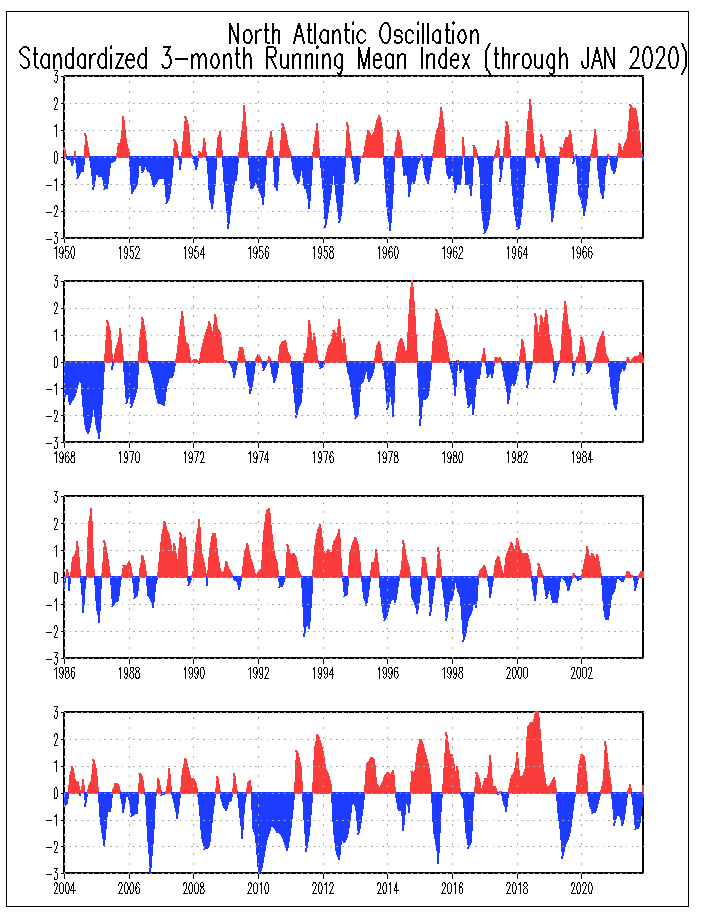 NOAA graphic
Unlike many of his European counterparts, Franklin showed a distinctly American obsession with practicality and efficiency. As a child he suggested to his father that if all the meat being salted for the winter meals were blessed at once, it would not be necessary to say grace at each meal, resulting in "a vast saving of time."


