We review recent efforts to detect small numbers of nuclear spins using magnetic resonance force microscopy. Magnetic resonance force microscopy (MRFM) is a scanning probe technique that relies on the mechanical measurement of the weak magnetic force between a microscopic magnet and the magnetic moments in a sample. Spurred by the recent progress in fabricating ultrasensitive force detectors, MRFM has rapidly improved its capability over the last decade. Today it boasts a spin sensitivity that surpasses conventional, inductive nuclear magnetic resonance detectors by about eight orders of magnitude. In this review we touch on the origins of this technique and focus on its recent application to nanoscale nuclear spin ensembles, in particular on the imaging of nanoscale objects with a three-dimensional (3D) spatial resolution better than 10 nm. We consider the experimental advances driving this work and highlight the underlying physical principles and limitations of the method. Finally, we discuss the challenges that must be met in order to advance the technique towards single nuclear spin sensitivity -- and perhaps -- to 3D microscopy of molecules with atomic resolution
Monday, June 21, 2010
Magnetic resonance force microscopy
Force-detected nuclear magnetic resonance: Recent advances and future challenges, preprint.

Monday, June 14, 2010
Neutrinoless Double Beta Decay
Nuclear Double Beta Decay, Fundamental Particle Physics, Hot Dark Matter, And Dark Energy preprint.
Nuclear double beta decay, an extremely rare radioactive decay process, is - in one of its variants - one of the most exciting means of research into particle physics beyond the standard model. The large progress in sensitivity of experiments searching for neutrinoless double beta decay in the last two decades - based largely on the use of large amounts of enriched source material in "active source experiments" - has lead to the observation of the occurrence of this process in nature (on a 6.4 sigma level), with the largest half-life ever observed for a nuclear decay process (2.2 x 10^{25} y). This has fundamental consequences for particle physics - violation of lepton number, Majorana nature of the neutrino. These results are independent of any information on nuclear matrix elements (NME)*. It further leads to sharp restrictions for SUSY theories, sneutrino mass, right-handed W-boson mass, superheavy neutrino masses, compositeness, leptoquarks, violation of Lorentz invariance and equivalence principle in the neutrino sector. The masses of light-neutrinos are found to be degenerate, and to be at least 0.22 +- 0.02 eV. This fixes the contribution of neutrinos as hot dark matter to >=4.7% of the total observed dark matter. The neutrino mass determined might solve also the dark energy puzzle. *{It is briefly discussed how important NME for 0nubb decay really are.}
Dark Matter: A Primer
Dark Matter: A Primer preprint.
see also this previous post: Dark Matter Review Article.
Dark matter is one of the greatest unsolved mysteries in cosmology at the present time. About 80% of the universe's gravitating matter is non-luminous, and its nature and distribution are for the most part unknown. In this paper, we will outline the history, astrophysical evidence, candidates, and detection methods of dark matter, with the goal to give the reader an accessible but rigorous introduction to the puzzle of dark matter. This review targets advanced students and researchers new to the field of dark matter, and includes an extensive list of references for further study
see also this previous post: Dark Matter Review Article.
Friday, June 11, 2010
Making Rope
The ancient art of laying rope
We describe a geometrical property of helical structures and show how it accounts for the early art of ropemaking. Helices have a maximum number of rotations that can be added to them -- and it is shown that for an $N$-ply this is a geometrical feature, not a material property. This geometrical insight explains why nearly identically appearing ropes can be made from very different materials and it is also the reason behind the unyielding nature of ropes. The maximally rotated strands behave as zero-twist structures. Under strain they neither rotate one or the other way. The necessity for the rope to be stretched while being laid, known from Egyptian tomb scenes, follows straightforwardly, as does the function of the top, an old tool for laying ropes. The repetitive structures of twisted metal wires in Viking arm and neck rings are discussed in the light of the new insight arising for the understanding of zero-twist structures. They are maximally rotated structures.
Saturday, June 05, 2010
Field Testing Sexual Selection in Crickets
Dance Like No One Is Watching, Sing Like No One Is Listening? in Science.
Genetic paternity testing and field observations of crickets challenge conventional wisdom about sex differences and fitness.
Freshwater Outburst from Lake Superior as a Trigger for the Cold Event 9300 Years Ago in Science.
Paleoclimate proxy records reveal a pervasive cooling event with a Northern Hemispheric extent ~9300 years ago. Coeval changes in the oceanic circulation of the North Atlantic imply freshwater forcing. However, the source, magnitude, and routing of meltwater have remained unknown. Located in central North America, Lake Superior is a key site for regulating the outflow of glacial meltwater to the oceans. Here, we show evidence for an ~45-meter rapid lake-level fall in this basin, centered on 9300 calibrated years before the present, due to the failure of a glacial drift dam on the southeast corner of the lake. We ascribe the widespread climate anomaly ~9300 years ago to this freshwater outburst delivered to the North Atlantic Ocean through the Lake Huron–North Bay–Ottawa River–St. Lawrence River valleys
The Lamb Shift
The Lamb Shift—Yesterday, Today, and Tomorrow in Science.
"Quantum field effects are magnified by collective interactions between many atoms."
"Quantum field effects are magnified by collective interactions between many atoms."
The Local Void
Local difficulty for Big Bang in Nature.
The relativistic Big Bang theory of cosmic evolution gives a good description of our expanding Universe on the grand scale. But closer to home, where we can observe galactic properties in detail, its predictions go awry. For instance, some of the largest galaxies in our neighbourhood are found in less crowded regions, contrary to standard-model predictions. And the region known as the Local Void contains many fewer galaxies than expected. The observations of nearby galaxies are more understandable if it is assumed that matter forms more rapidly into galaxies and clusters than current theory allows. Jim Peebles and Adi Nusser outline recent efforts by cosmologists to adapt fundamental theory to let new physics operate on the scale of galaxies, yet preserve the properties of the present model on cosmological scales
Wednesday, June 02, 2010
The Center of the Galaxy
The Massive Black Hole and Nuclear Star Cluster in the Center of the Milky Way
 Chandra image of Sgr A*
The Galactic Center is an excellent laboratory for studying phenomena and physical occurring in many other galactic nuclei. The Center of our Milky Way is by far the closest galactic nucleus, and observations with exquisite resolution and sensitivity cover 18 orders of magnitude in energy of electromagnetic radiation. Theoretical simulations have become increasingly more powerful in explaining these measurements. This review summarizes the recent progress in observational and theoretical work on the central parsec, with a strong emphasis on the current empirical evidence for a central massive black hole and on the properties of the surrounding dense star cluster. We present the current evidence, from the analysis of the orbits of more than two dozen stars and from the measurements of the size and motion of the central compact radio source, Sgr A*, that this radio source must be a massive black hole of about 4.4 x 10^6 Solar Masses, beyond any reasonable doubt. We report what is known about the structure and evolution of the dense nuclear star cluster surrounding this black hole, including the astounding fact that stars have been forming in the vicinity of Sgr A* recently, apparently with a top-heavy stellar mass function. We discuss a dense concentration of fainter stars centered in the immediate vicinity of the massive black hole, three of which have orbital peri-bothroi of less than one light day. This 'S-star cluster' appears to consist mainly of young early-type stars, in contrast to the predicted properties of an equilibrium 'stellar cusp' around a black hole. This constitutes a remarkable and presently not fully understood 'paradox of youth'. We also summarize more briefly what is known about the emission properties of the accreting gas onto Sgr A* and how this emission is beginning to delineate the physical properties in the hot accretion zone around the event horizon.
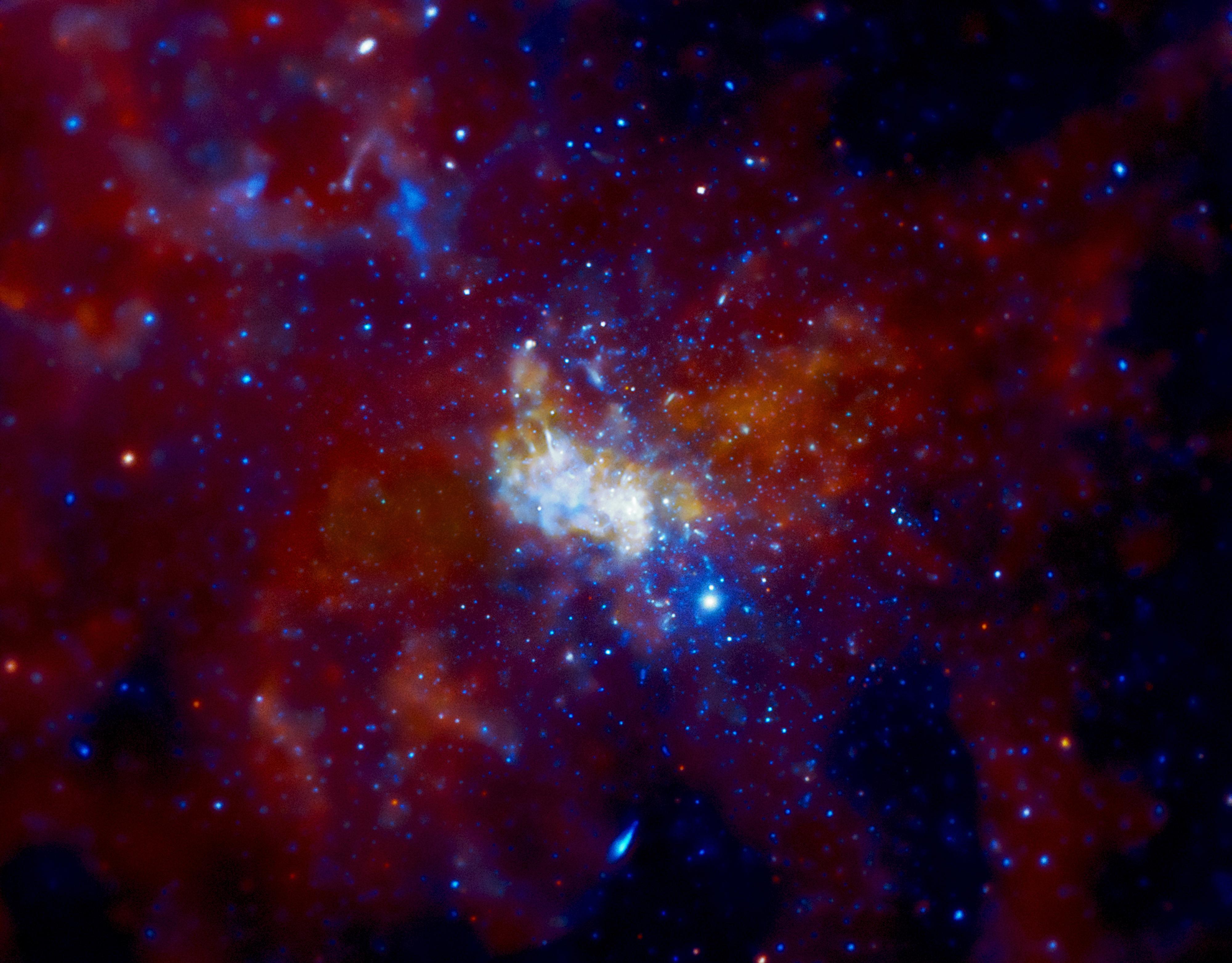 Chandra image of Sgr A*
Saturday, May 29, 2010
Tuesday, May 25, 2010
Solar System Dating
Astronomy with Radioactivities: (An Introduction to Astrophysics with
Decaying Isotopes)
Decaying Isotopes)
This chapter presents a (partial) review of the information we can derive on the early history of the Solar System from radioactive nuclei of very different half-life, which were recognized to have been present alive in pristine solids. In fact, radioactivities open for us a unique window on the evolution of the solar nebula and provide tools for understanding the crucial events that determined and accompanied the formation of the Sun. Discussing these topics will require consideration of (at least) the following issues. i) The determination of an age for solar system bodies, as it emerged especially from the application of radioactive dating. ii) A synthetic account of the measurements that proved the presence of radioactive nuclei (especially those of half-life lower than about 100 Myr) in the Early Solar System (hereafter ESS). iii) An explanation of their existence in terms of galactic nucleosynthesis, and/or of local processes (either exotic or in-situ) preceding and accompanying the formation of the Sun. This will also need some reference to the present scenarios for star formation, as applied to the ESS
Monday, May 24, 2010
Grand Unified Theories
The Algebra of Grand Unified Theories
The Standard Model of particle physics may seem complicated and arbitrary, but it has hidden patterns that are revealed by the relationship between three "grand unified theories": theories that unify forces and particles by extending the Standard Model symmetry group U(1) x SU(2) x SU(3) to a larger group. These three theories are Georgi and Glashow's SU(5) theory, Georgi's theory based on the group Spin(10), and the Pati-Salam model based on the group SU(2) x SU(2) x SU(4). In this expository account for mathematicians, we explain only the portion of these theories that involves finite-dimensional group representations. This allows us to reduce the prerequisites to a bare minimum while still giving a taste of the profound puzzles that physicists are struggling to solve.
Sunday, May 23, 2010
Flow My Tears, the Policeman Said
Flow My Tears, the Policeman Said is a paranoid science fiction novel by Philip K. Dick.
Scrutinizing him, she said, 'Maybe your're not a celebrity; maybe I've reverted back to my delusional period. They said I probably would, sometime. Sooner or later. Maybe it's later now.'
'That,' he pointed out, 'would make me a hallucination of yours. Try harder; I don't feel completely real.'
She laughed.
The Big Sleep
The Big Sleep is a detective novel by Raymond Chandler.
"You know what Canino will do? Beat my teeth out and kick me in the stomach for mumbling."
See The Simple of Art of Murder for a previous post about Raymond Chandler.
"You know what Canino will do? Beat my teeth out and kick me in the stomach for mumbling."
See The Simple of Art of Murder for a previous post about Raymond Chandler.
A Simple Heart
A Simple Heart is a story by Gustave Flaubert, it's one of my favorites. Sad, funny, droll - a person, place and time that has no particular intrinsic interest but despite that (or perhaps because of it) a great story.
Wednesday, May 19, 2010
Terahertz Lenses
X-Ray Vision, Without the Radiation in Science. "X-ray–like imaging without the harmful radiation and cell phones with more bandwidth are closer to reality now that researchers have developed a novel type of lens that works with terahertz frequencies. The new lens is a metamaterial, an artificial material with a structure made from many tiny parts, and it could drastically expand what lenses can do. "
Sunday, May 16, 2010
Thursday, May 13, 2010
The Inner Core
Hemispherical anisotropic patterns of the Earth’s inner core in PNAS.
It has been shown that the Earth’s inner core has an axisymmetric anisotropic structure with seismic waves traveling ∼3% faster along polar paths than along equatorial directions. Hemispherical anisotropic patterns of the solid Earth’s core are rather complex, and the commonly used hexagonal-close-packed iron phase might be insufficient to account for seismological observations. We show that the data we collected are in good agreement with the presence of two anisotropically specular east and west core hemispheres. The detected travel-time anomalies can only be disclosed by a lattice-preferred orientation of a body-centered-cubic iron aggregate, having a fraction of their [111] crystal axes parallel to the Earth’s rotation axis. This is compelling evidence for the presence of a body-centered-cubic Fe phase at the top of the Earth’s inner core
Ultrasmall Archaea
Enigmatic, ultrasmall, uncultivated Archaea in PNAS.
Metagenomics has provided access to genomes of as yet uncultivated microorganisms in natural environments, yet there are gaps in our knowledge—particularly for Archaea—that occur at relatively low abundance and in extreme environments. Ultrasmall cells (< 500 nm in diameter) from lineages without cultivated representatives that branch near the crenarchaeal>/euryarchaeal divide have been detected in a variety of acidic ecosystems.
Monday, May 10, 2010
Manta Rays
Once again I've had the good fortune to visit the Manta Rays of San Benedicto Island, in the Pacific off the coast of Mexico. Thanks again to Gregory Colbert, his film crew and friends, and the crew of the Nautilus Explorer for another wonderful trip.
I haven't been able to find a reference to the tubes just above the corners of the manta's mouth pictured below. Thanks to Sten Johansson of the Nautilus Explorer for the photos and for pointing out this interesting feature. Please comment if you can identify these structures, a reference or link to the literature would be especially welcome!


I haven't been able to find a reference to the tubes just above the corners of the manta's mouth pictured below. Thanks to Sten Johansson of the Nautilus Explorer for the photos and for pointing out this interesting feature. Please comment if you can identify these structures, a reference or link to the literature would be especially welcome!


Newton and the Counterfeiter
Newton and the Counterfeiter: The Unknown Detective Career of the World's Greatest Scientist a book by Thomas Levenson is about Isaac Newton and William Chaloner a notorious counterfeiter that Newton prosecuted when he was Warden of the Royal Mint.
While Newton was perhaps the greatest scientific genius of all time, and even a very competent functionary - as detailed in this book - he was strictly mortal in the realm of financial investments. He lost a fortune in the South Sea Bubble of 1720 which rankled him greatly, admitting "that he could not calculate the madness of the people."
While Newton was perhaps the greatest scientific genius of all time, and even a very competent functionary - as detailed in this book - he was strictly mortal in the realm of financial investments. He lost a fortune in the South Sea Bubble of 1720 which rankled him greatly, admitting "that he could not calculate the madness of the people."
Saturday, April 24, 2010
Paleocene-Eocene Thermal Maximum
Did Monster Eruptions Warm the World? in Science.
The Paleocene-Eocene Thermal Maximum occured 55 million years ago. Temperatures rose over 5C and there were mass extinctions - many classes of current mammals arose afterwards. Researchers have recently found evidence of massive undersea volcanic eruptions near Iceland from that time period. The volcanic release of methane may have caused the warming.
The Paleocene-Eocene Thermal Maximum occured 55 million years ago. Temperatures rose over 5C and there were mass extinctions - many classes of current mammals arose afterwards. Researchers have recently found evidence of massive undersea volcanic eruptions near Iceland from that time period. The volcanic release of methane may have caused the warming.
Friday, April 23, 2010
Dark Matter Review Article
Dark Matter in Modern Cosmology preprint.
The presence of Dark Matter (DM) is required in the universe regulated by the standard general relativistic theory of gravitation. The nature of DM is however still elusive to any experimental search. We discuss here the process of accumulation of evidence for the presence of DM in the universe, the astrophysical probes for the leading DM scenarios that can be obtained through a multi-frequency analysis of cosmic structures on large scales, and the strategies related to the multi-messenger and multi-experiment astrophysical search for the nature of the DM.
Sunday, April 18, 2010
Cosmic microwave background anisotropies
Lecture notes on the physics of cosmic microwave background anisotropies
We review the theory of the temperature anisotropy and polarization of the cosmic microwave background (CMB) radiation, and describe what we have learned from current CMB observations. In particular, we discuss how the CMB is being used to provide precise measurements of the composition and geometry of the observable universe, and to constrain the physics of the early universe. We also briefly review the physics of the small-scale CMB fluctuations generated during and after the epoch of reionization, and which are the target of a new breed of arcminute-resolution instruments
Dark Energy
Why all these prejudices against a constant?
The expansion of the observed universe appears to be accelerating. A simple explanation of this phenomenon is provided by the non-vanishing of the cosmological constant in the Einstein equations. Arguments are commonly presented to the effect that this simple explanation is not viable or not sufficient, and therefore we are facing the "great mystery" of the "nature of a dark energy". We argue that these arguments are unconvincing, or ill-founded.
Galaxy Structure
The Universal Faber-Jackson Relation
The mass distribution in Spirals
In the context of modified Newtonian dynamics, the fundamental plane, as the observational signature of the Newtonian virial theorem, is defined by high surface brightness objects that deviate from being purely isothermal: the line-of-sight velocity dispersion should slowly decline with radius as observed in luminous elliptical galaxies. All high surface brightness objects (e.g. globular clusters, ultra-compact dwarfs) will lie, more or less, on the fundamental plane defined by elliptical galaxies, but low surface brightness objects (dwarf spheroidals) would be expected to deviate from this relation. This is borne out by observations. With MOND, the Faber-Jackson relation (the power-law relation between luminosity and velocity dispersion), ranging from globular clusters to clusters of galaxies and including both high and low surface brightness objects, is the more fundamental and universal scaling relation in spite of its larger scatter. Faber-Jackson reflects the presence of an additional dimensional constant (the MOND acceleration) in the structure equation
The mass distribution in Spirals
In the past years a wealth of observations has unraveled the structural properties of the Dark and Luminous mass distribution in spirals. These have pointed out to an intriguing scenario not easily explained by present theories of galaxy formation. The investigation of individual and coadded objects has shown that the spiral rotation curves follow, from their centers out to their virial radii, a Universal profile (URC) that arises from the tuned combination of a stellar disk and of a dark halo. The importance of the latter component decreases with galaxy mass. Individual objects, on the other hand, have clearly revealed that the dark halos encompassing the luminous discs have a constant density core. This resulting observational scenario poses important challenges to presently favored theoretical
Tuesday, April 13, 2010
DSLR with nice HD Video Capabilities
"The Last 3 Minutes"
shot with the Canon 5D Mark II DSLR. Try to watch in full screen mode with HD on by following the link that's mentioned.
"The Last 3 Minutes" From Shane Hurlbut, ASC from Shane Hurlbut, ASC on Vimeo.
shot with the Canon 5D Mark II DSLR. Try to watch in full screen mode with HD on by following the link that's mentioned.
One Hedge Fund that made money fueling the Bubble
The Magnetar Trade: How One Hedge Fund Helped Keep the Bubble Going at ProPublica.
"A hedge fund, Magnetar, helped create arcane mortgage-based instruments, pushed for risky things to go inside them and then bet against the investments"
"A hedge fund, Magnetar, helped create arcane mortgage-based instruments, pushed for risky things to go inside them and then bet against the investments"
Sunday, April 11, 2010
More about the mathematician Perelman
He Conquered the Conjecture by John Allen Paulos in the New York Review of Books is a review of Perfect Rigor: A Genius and the Mathematical Breakthrough of the Century by Masha Gessen a biography of the Russian mathematician Grigoriy Perelman who recently solved a long-standing problem in topology, the Poincaré conjecture.
Markets, Theory and Reality
Hedging America by Robert M. Solow in the magazine The New Republic. Solow is a Nobel Prize winning economist who also happened to teach my macroeconomics class at MIT many a moon ago. The article discusses the theory behind markets and how the reality from time to time falls conspicuously short.
Friday, April 09, 2010
The Economics of Dueling
The Deadliest of Games: The Institution of Dueling.
Recent historical research indicates that ritualistic dueling had a rational basis. Basically, under certain social and economic conditions, individuals must ght in order to maintain their personal credit and social standing. We use a repeated two-player sequential game with random matching to show how the institution of dueling could have functioned as a costly but incentive-compatible means by which individuals could demonstrate their good faith dealings by defending their "honor".
Saturday, April 03, 2010
Why was the ancient Earth so warm?
Early Earth: Faint young Sun redux Early in the Earth's history (several billion years ago) it is thought that the Sun was dimmer, so much so that the oceans would have been frozen. However there is ample evidence that the oceans were mostly liquid during that period. Greenhouse gases in the atmosphere may have kept the Earth warm. But there's a new theory that the Earth's surface may have also been darker in the past, allowing it to retain more heat from the fainter sun and resulting in warmer temperatures.
Prospects for Personal Genomics
Multiple personal genomes await by J. Craig Venter in Nature. Gene sequencing pioneer Venter reviews the current state of the art. One difficult problem is due to chromosomes occuring in pairs, one from each parent. Apparently it isn't easy to distinguish the two copies and the differences between them.
Ice Age Flood went to the Arctic not Atlantic
River reveals chilling tracks of ancient flood in Nature. After the end of the last ice age there was another cool period, the Younger Dryas, 13,000 years ago. One theory was that a huge freshwater lake in Canada, formed from melted glaciers, suddenly drained into the North Atlantic, disrupted the warm water conveyer belt there, resulting in a resumption of cold conditions in the Northern Hemisphere. But now it appears that instead Lake Agassiz drained north into the Arctic Ocean. Did that flood still cause the Younger Dryas cold period?
Chemistry of the Ancient Oceans
Ocean Chemistry and Early Animals in Science. Animal life requires oxygen. What stages took place before the current oxygenated ocean chemistry and animal communities beccame established around 542 million years ago?
Quark Masses
Mass of the Common Quark Finally Nailed Down in Science.
Currently there are six known flavors of quarks, each with a different mass. The masses haven't been known with much accuracy, in part because quarks are never found in isolation, they are are always found bound with other quarks. The binding interaction is so strong that most of the mass of the bound particle (like a proton or neutron) is due to the energy of interaction. These new theorectical calculations may give the quark masses to a greater degree of accuracy.
Currently there are six known flavors of quarks, each with a different mass. The masses haven't been known with much accuracy, in part because quarks are never found in isolation, they are are always found bound with other quarks. The binding interaction is so strong that most of the mass of the bound particle (like a proton or neutron) is due to the energy of interaction. These new theorectical calculations may give the quark masses to a greater degree of accuracy.
Friday, April 02, 2010
Powerful People are Better Liars
Powerful Lies an article from Columbia Business School.
"Most people become stressed when lying, but new research shows that people with power feel just fine when lying — and are better at getting away with it."
"Most people become stressed when lying, but new research shows that people with power feel just fine when lying — and are better at getting away with it."
Monday, March 22, 2010
Arthropod Phylogeny
Arthropod relationships revealed by phylogenomic analysis of nuclear protein-coding sequences in Nature.
See also Surprising New Branches on Arthropod Family Tree
The the newly defined sister group to the Hexapoda (insects and related species) is the Xenocarida or strange shrimp some unusual recently discovered marine crustaceans. So insects are actually more closely related to some oddball marine crustaceans than other terrestrial arthropods such as spiders.
The evolutionary interrelationships of arthropods has long been a matter of dispute. A new phylogeny applies an arsenal of techniques to more than 41,000 base pairs of DNA from 75 arthropod species. The results support the idea that insects are land–living crustaceans, that crustaceans comprise a diverse assemblage of at last three distinct arthropod types, and that myriapods (millipedes and centipedes) comprise the closest relatives of this great 'pancrustacean' group
See also Surprising New Branches on Arthropod Family Tree
The the newly defined sister group to the Hexapoda (insects and related species) is the Xenocarida or strange shrimp some unusual recently discovered marine crustaceans. So insects are actually more closely related to some oddball marine crustaceans than other terrestrial arthropods such as spiders.
High Energy Cosmic Rays
Cosmic-ray theory unravels in Nature.
Could they be iron nuclei instead of protons?
Astrophysicists ponder whether ultrahigh-energy particles really do come from the centre of galaxies
Could they be iron nuclei instead of protons?
Pregnant fathers selective abortion
Evolutionary biology: Pregnant fathers in charge in Nature.
Pipefish and related species provide rare examples of extreme male parental care. Controlled breeding experiments allow the resulting conflicts of interest between female, male and offspring to be explored
The Golden Ratio found in a magnet
Solid-state physics: Golden ratio seen in a magnet
The golden ratio — an exact 'magic' number often claimed to be observed when taking ratios of distances in ancient and modern architecture, sculpture and painting — has been spotted in a magnetic compound
Sterile Neutrinos
Hunt for the sterile neutrino heats up in Nature.
Neutrinos like to keep to themselves. These ghostly particles are so reluctant to interact with ordinary matter that billions zip harmlessly through each person every day, and it takes giant, specialized detectors to capture even a handful of them. Now astronomers are finding hints of an even more elusive type of neutrino, one so shy that it could never be detected directly: the sterile neutrino
Sunday, March 21, 2010
Fairness Behaviour Across Societies
Fairness in Modern Society in Science.
Experiments in psychology and economics have demonstrated that in industrialized societies all over the world, a substantial fraction of individuals will be fair in anonymous interactions and will punish unfairness (1, 2). However, it has not been clear whether this benevolent, prosocial behavior depends on innate human psychology or norms peculiar to industrialized societies. Henrich et al. explored the motivation for fairness in anonymous interactions across dramatically diverse societies and on page 1480 of this issue (3), they report that this behavior increases with the level of the society's market integration, measured as households' average percentage of calories that are purchased.
Controlling Turbulence
Controlling Turbulence in Science.
Pipes feature strongly in the infrastructure of everyday life, from domestic water pipes to oil and natural gas conduits. A primary consequence of the onset of turbulence in the fluid flowing through the pipes is the dramatically increased power required to pump stuff at the same rate. Thus, the incentives to understand and control the transition process are strong. However, more than 100 years after Osborne Reynolds's seminal experiments on the transition of flow through a pipe from a laminar (smooth) to a turbulent state, the exact physical mechanism that drives this phenomenon still vexes the fluid mechanics community. On page 1491 of this issue, Hof et al. (1) describe a mechanism that feeds energy into a turbulent flow system, allowing the onset of the transition to be manipulated and even the suppression of the turbulence
Is Depression Adaptive?
The bright side of being blue:
Depression as an adaptation for analyzing complex problems
by Paul W. Andrews and J. Anderson Thomson, Jr.
see also Depression’s Upside in the New York Times.
Depression as an adaptation for analyzing complex problems
by Paul W. Andrews and J. Anderson Thomson, Jr.
Depression ranks as the primary emotional condition for which help is sought. Depressed people often have severe, complex problems, and rumination is a common feature. Depressed people often believe that their ruminations give them insight into their problems, but clinicians often view depressive rumination as pathological because it is difficult to disrupt and interferes with the ability to concentrate on other things. Abundant evidence indicates that depressive rumination involves the analysis of episode-related problems. Because analysis is time consuming and requires sustained processing, disruption would interfere with problem-solving. The analytical rumination (AR) hypothesis proposes that depression is an adaptation that evolved as a response to complex problems and whose function is to minimize disruption of rumination and sustain analysis of complex problems. It accomplishes this by giving episode-related problems priority access to limited processing resources, by reducing the desire to engage in distracting activities (anhedonia), and by producing psychomotor changes that reduce exposure to distracting stimuli. Because processing resources are limited, the inability to concentrate on other things is a tradeoff that must be made to sustain analysis of the triggering problem. The analytical rumination hypothesis is supported by evidence from many levels, including genes, neurotransmitters and their receptors, neurophysiology, neuroanatomy, neuroenergetics, pharmacology, cognition and behavior, and the efficacy of treatments. In addition, we address and provide explanations for puzzling findings in the cognitive and behavioral genetics literatures on depression. In the process, we challenge the belief that serotonin transmission is low in depression. Finally, we discuss implications of the hypothesis for understanding and treating depression.
see also Depression’s Upside in the New York Times.
Friday, March 19, 2010
First Clay Mathematics Prize Awarded
The First Clay Mathematic Prize was awarded to Grigoriy Perelman for solving the Poincare Conjecture.
Books
Too Big to Fail by Andrew Ross Sorkin a dense account of the 2008 financial crisis.
Drive by Daniel H. Pink, about research into human motivation.
Lanark by Alasdair Gray, a Kafkasque novel.
Empire of Illusion by Chris Hedges, a polemic against corporations and popular culture which I would not recommend.
Shop Class as Soulcraft: An Inquiry Into the Value of Work by Matthew B. Crawford a charming book celebrating manual work and craftsmanship.
Drive by Daniel H. Pink, about research into human motivation.
Lanark by Alasdair Gray, a Kafkasque novel.
Empire of Illusion by Chris Hedges, a polemic against corporations and popular culture which I would not recommend.
Shop Class as Soulcraft: An Inquiry Into the Value of Work by Matthew B. Crawford a charming book celebrating manual work and craftsmanship.
Saturday, March 13, 2010


 photos by Mike Murphy
Dancers on the Silver Bank

 photos by Mike Murphy
The humpback whale courtship display is one of the most spectacular in nature. The female is almost always the active one (the "dancer" or "valentine") while the male watches passively - a reversal of the usual norm in the animal kingdom. Occasionally the male begins to join in, which started to happen at the end of the this encounter on the Silver Bank two weeks ago, but I don't believe we got a picture of that part alas.
Saturday, February 27, 2010
Humpback Twister
A twisting water formation is sometimes formed by the tip of a humpback whale's pectorial fin and then spins off. Frequently seen, but not so often photographed this clearly - taken by Mike Murphy last week on the Silver Bank.


 photo by Tom Conlin
Video of the photographer by Tom Conlin - the still above was taken from the video.


 photo by Tom Conlin
Video of the photographer by Tom Conlin - the still above was taken from the video.
Saturday, February 20, 2010
A Very Friendly Whale
 photo by John Munro
I'm back on the Silver Bank with Tom Conlin of Aquatic Adventures aboard the Turks and Caicos Explorer II. We encountered a very friendly female humpback whale with her male escort, who is blowing bubbles at us from below.
Thursday, February 04, 2010
Saturday, January 30, 2010
A Book about Prices
Priceless: The Myth of Fair Value (and How to Take Advantage of It) by William Poundstone is an entertaining summary of the recent scientific literature about prices and uncertainty. Unfortunately it also reinforces one's dismay over the limitations of human reasoning ability in real-life practical situations.
Cooking as Courtship
Cooking as Courtship: a manual of sorts, exploring the ins and outs of love and friendship in the context of food - a charming book, also available in blog format.
Comparison of Human and Chimpanzee Y Chromosomes
Chimpanzee and human Y chromosomes are remarkably divergent in structure and gene content in Nature.
The human Y chromosome began to evolve from an autosome hundreds of millions of years ago, acquiring a sex-determining function and undergoing a series of inversions that suppressed crossing over with the X chromosome. Little is known about the recent evolution of the Y chromosome because only the human Y chromosome has been fully sequenced. Prevailing theories hold that Y chromosomes evolve by gene loss, the pace of which slows over time, eventually leading to a paucity of genes, and stasis. These theories have been buttressed by partial sequence data from newly emergent plant and animal Y chromosomes, but they have not been tested in older, highly evolved Y chromosomes such as that of humans. Here we finished sequencing of the male-specific region of the Y chromosome (MSY) in our closest living relative, the chimpanzee, achieving levels of accuracy and completion previously reached for the human MSY. By comparing the MSYs of the two species we show that they differ radically in sequence structure and gene content, indicating rapid evolution during the past 6 million years. The chimpanzee MSY contains twice as many massive palindromes as the human MSY, yet it has lost large fractions of the MSY protein-coding genes and gene families present in the last common ancestor. We suggest that the extraordinary divergence of the chimpanzee and human MSYs was driven by four synergistic factors: the prominent role of the MSY in sperm production, ‘genetic hitchhiking’ effects in the absence of meiotic crossing over, frequent ectopic recombination within the MSY, and species differences in mating behaviour. Although genetic decay may be the principal dynamic in the evolution of newly emergent Y chromosomes, wholesale renovation is the paramount theme in the continuing evolution of chimpanzee, human and perhaps other older MSYs.
Chromosome Segregation
Towards building a chromosome segregation machine in Nature.
All organisms, from bacteria to humans, face the daunting task of replicating, packaging and segregating up to two metres (about 6 × 10^9 base pairs) of DNA when each cell divides. This task is carried out up to a trillion times during the development of a human from a single fertilized cell. The strategy by which DNA is replicated is now well understood. But when it comes to packaging and segregating a genome, the mechanisms are only beginning to be understood and are often as variable as the organisms in which they are studied.
Quantum Computers
Physics: Quantum computing in Nature.
The race is on to build a computer that exploits quantum mechanics. Such a machine could solve problems in physics, mathematics and cryptography that were once thought intractable, revolutionizing information technology and illuminating the foundations of physics. But when?
Martian Methane
Planetary science: A whiff of mystery on Mars in Nature.
Methane has been discovered in the Martian atmosphere. Could that be a sign of life?
Methane has been discovered in the Martian atmosphere. Could that be a sign of life?
Friday, January 29, 2010
No Anomalies in the Cosmic Microwave Background
Seven-Year Wilkinson Microwave Anisotropy Probe (WMAP) Observations: Are There Cosmic Microwave Background Anomalies?
My previous blog posts on the Axis of Evil anomaly here and here.
A diagram of the WMAP spacecraft:
A simple six-parameter LCDM model provides a successful fit to WMAP data, both when the data are analyzed alone and in combination with other cosmological data. Even so, it is appropriate to search for any hints of deviations from the now standard model of cosmology, which includes inflation, dark energy, dark matter, baryons, and neutrinos. The cosmological community has subjected the WMAP data to extensive and varied analyses. While there is widespread agreement as to the overall success of the six-parameter LCDM model, various "anomalies" have been reported relative to that model. In this paper we examine potential anomalies and present analyses and assessments of their significance. In most cases we find that claimed anomalies depend on posterior selection of some aspect or subset of the data. Compared with sky simulations based on the best fit model, one can select for low probability features of the WMAP data. Low probability features are expected, but it is not usually straightforward to determine whether any particular low probability feature is the result of the a posteriori selection or of non-standard cosmology. We examine in detail the properties of the power spectrum with respect to the LCDM model. We examine several potential or previously claimed anomalies in the sky maps and power spectra, including cold spots, low quadrupole power, quadropole-octupole alignment, hemispherical or dipole power asymmetry, and quadrupole power asymmetry. We conclude that there is no compelling evidence for deviations from the LCDM model, which is generally an acceptable statistical fit to WMAP and other cosmological data.
My previous blog posts on the Axis of Evil anomaly here and here.
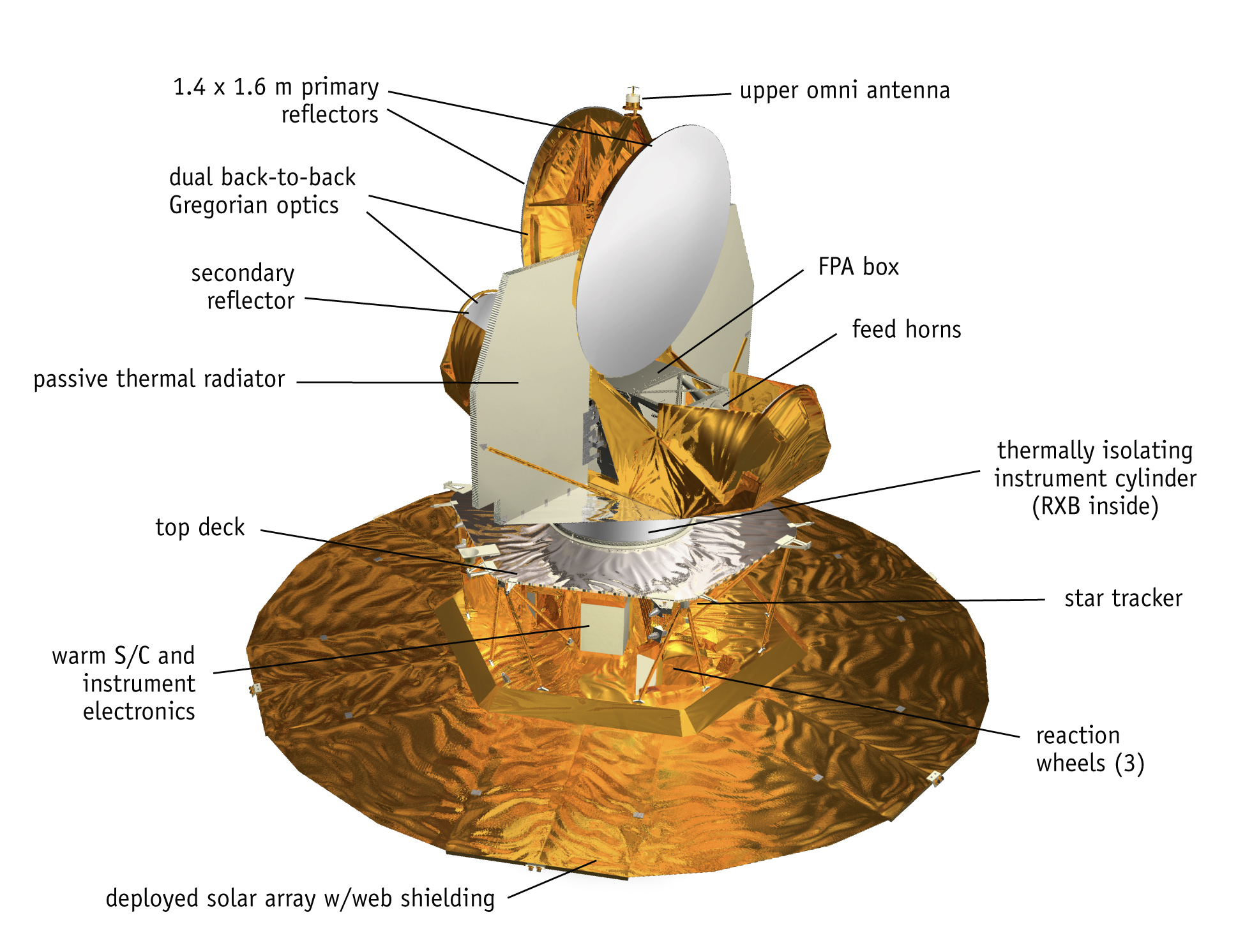
A diagram of the WMAP spacecraft:

Wednesday, January 27, 2010
The Perry Bible Fellowship
The Perry Bible Fellowship is a webcomic which can be found here. It is irreverent, to put it mildly.


Monday, January 25, 2010
The Reason Why the Earth is at the Center of the Universe
I'm reading Galileo at Work: His Scientific Biography by Stillman Drake. Galileo had literary interests as well as scientific. When he was younger (before he had even adopted the Copernican system) he was invited to lecture on Dante's Inferno. "Galileo expounded on God's reasons for having placed [the earth] at the center of the universe --- namely, to have it as far as possible from the sight of the blessed residents of Heaven, least they be offended by its grossness."
 'In the midway of this our mortal life, I found me in a gloomy wood, astray'
 'In the midway of this our mortal life, I found me in a gloomy wood, astray'
Alternatives to dark matter
Alternatives to dark matter: Modified gravity as an alternative to dark matter by Jacob D. Bekenstein.
The premier alternative to the dark matter paradigm is modified gravity. Following an introduction to the relevant phenomenology of galaxies, I review the MOND paradigm, an effective summary of the observations which any theory must reproduce. A simple nonlinear modified gravity theory does justice to MOND at the nonrelativistic level, but cannot be elevated to the relativistic level in a unique way. I go in detail into the covariant tensor-vector-theory (TeVeS) which not only recovers MOND but can also deal in detail with gravitational lensing and cosmology. Problems with MOND and TeVeS at the level of clusters of galaxies are given attention. I also summarize the status of TeVeS cosmology
The Crab Canon by J.S.Bach
There's a discusion of the video here: This Week's Finds in Mathematical Physics (Week 291).
Saturday, January 23, 2010
Group Extensions
Some notes on group extensions by Fields Medallist Terance Tao, contains a "high-concept" overview of methods for extending mathematical spaces, a typical and powerful technique.
Wednesday, January 20, 2010
Minature Heat Engine and Refrigerator
Piezoresistive heat engine and refrigerator
Heat engines provide most of our mechanical power and are essential for long-range transportation. However, whereas significant progress has been made in the miniaturization of motors driven by electrostatic forces, it has proven difficult to reduce the size of conventional liquid or gas driven heat engines below 10^7 um^3. Here we demonstrate an all-silicon reciprocating heat engine with a volume of less than 0.5 um^3. The device draws heat from a DC current using the piezoresistive effect and converts it into mechanical energy by expanding and contracting at different temperatures. It is shown that the engine can even increase the mechanical energy of a resonator when its motion is governed by random thermal fluctuations. When the thermodynamic cycle of the heat engine is reversed, it operates as a refrigerator or heat pump that can reduce motional noise in mechanical systems. In contrast to the Peltier effect, the direction of the thermal current does not depend on the direction of the electrical current.
Dense Stars
Dense matter in compact stars - A pedagogical introduction
Cold and dense nuclear and/or quark matter can be found in the interior of compact stars. It is very challenging to determine the ground state and properties of this matter because of the strong-coupling nature of QCD. I give a pedagogical introduction to microscopic calculations based on phenomenological models, effective theories, and perturbative QCD. I discuss how the results of these calculations can be related to astrophysical observations to potentially rule out or confirm candidate phases of dense matter.
Tuesday, January 19, 2010
Logicomix

Logicomix is a graphic novel which features a fictionalized life story of the Philosopher/Logician Bertrand Russell. I thought the story was quite charming and did manage to give some nice hints about the controversies in the foundations of mathematics, including Russells' Paradox, one of my favorites. I've never tried to read Principia Mathematica (Russell and Whitehead's magnum opus) myself, though I once had a meeting at a professor's office who showed me a copy - he was a big fan of the work - it looked pretty hairy!
Nucleon Excitations
Nucleon Excitations
Baryon Spectroscopy and the Origin of Mass
The mass pattern of The mass pattern of nucleon and Delta resonances is compared with predictions based on quark models, the Skyrme model, AdS/QCD, and the conjecture of chiral symmetry restoration. and $\Delta$ resonances is compared with predictions based on quark models, the Skyrme model, AdS/QCD, and the conjecture of chiral symmetry restoration.
Baryon Spectroscopy and the Origin of Mass
The proton mass arises from spontaneous breaking of chiral symmetry and the formation of constituent quarks. Their dynamics cannot be tested by proton tomography but only by studying excited baryons. However, the number of excited baryons is much smaller than expected within quark models; even worse, the existence of many known states has been challenged in a recent analysis which includes - compared to older analyses - high-precision data from meson factories. Hence $\pi N$ elastic scattering data do not provide a well-founded starting point of any phenomenological analysis of the baryon excitation spectrum. Photoproduction experiments now start to fill in this hole. Often, they confirm the old findings and even suggest a few new states. These results encourage attempts to compare the pattern of observed baryon resonances with predictions from quark models, from models generating baryons dynamically from meson-nucleon scattering amplitudes, from models based on gravitational theories, and with the conjecture that chiral symmetry may be restored at high excitation energies. Best agreement is found with a simple mass formula derived within AdS/QCD. Consequences for our understanding of QCD are discussed as well as experiments which may help to decide on the validity of models.
Monday, January 18, 2010
Zipf's Law
On the Universality of Zipf's Law
Zipf's law is the most common statistical distribution displaying scaling behavior. Cities, populations and firms are just a few of the examples of this seemingly universal law. Although many different models have been proposed, no general theoretical explanation has been shown to exist for its universality. Here we show that Zipf's law is, in fact, an inevitable outcome of a very general class of stochastic systems. Borrowing concepts from Algorithmic Information Theory, our derivation is based on the properties of the symbolic sequence obtained through successive observations over a system with an unbounded number of possible states. Specifically, we assume that the complexity of the description of the system provided by the sequence of observations is the one expected for a system evolving to a stable state between order and disorder. This result is obtained from a small set of mild, physically relevant assumptions. The general nature of our derivation and its model-free basis would explain the ubiquity of such a law in real systems.
Friday, January 15, 2010
Two Dimesional Time
Physics With Two Time Dimensions
We explore the properties of physical theories in space-times with two time dimensions. We show that the common arguments used to rule such theories out do not apply if the dynamics associated with the additional time dimension is thermal or chaotic and does not permit long-lived time-like excitations. We discuss several possible realizations of such theories, including holographic representations and the possibility that quantum dynamics emerges as a consequence of a second time dimension
Wednesday, January 13, 2010
Where does the element Beryllium come from?
Beryllium abundances and the formation of the halo and the thick disk
The single stable isotope of beryllium is a pure product of cosmic-ray spallation in the ISM. Assuming that the cosmic-rays are globally transported across the Galaxy, the beryllium production should be a widespread process and its abundance should be roughly homogeneous in the early-Galaxy at a given time. Thus, it could be useful as a tracer of time. In an investigation of the use of Be as a cosmochronometer and of its evolution in the Galaxy, we found evidence that in a log(Be/H) vs. [alpha/Fe] diagram the halo stars separate into two components. One is consistent with predictions of evolutionary models while the other is chemically indistinguishable from the thick-disk stars. This is interpreted as a difference in the star formation history of the two components and suggests that the local halo is not a single uniform population where a clear age-metallicity relation can be defined. We also found evidence that the star formation rate was lower in the outer regions of the thick disk, pointing towards an inside-out formation.
dark matter and gravitational lensing
The dark matter of gravitational lensing
Weak lensing, dark matter and dark energy
Microlensing as a probe of the Galactic structure; 20 years of microlensing optical depth studies
We review progress in understanding dark matter by astrophysics, and particularly via the effect of gravitational lensing. Evidence from many different directions now implies that five sixths of the material content of the universe is in this mysterious form, separate from and beyond the ordinary "baryonic" particles in the standard model of particle physics. Dark matter appears not to interact via the electromagnetic force, and therefore neither emits nor reflects light. However, it definitely does interact via gravity, and has played the most important role in shaping the Universe on large scales. The most successful technique with which to investigate it has so far been gravitational lensing. The curvature of space-time near any gravitating mass (including dark matter) deflects passing rays of light - observably shifting, distorting and magnifying the images of background galaxies. Measurements of such effects currently provide constraints on the mean density of dark matter, and its density relative to baryonic matter; the size and mass of individual dark matter particles; and its cross section under various fundamental forces.
Weak lensing, dark matter and dark energy
Weak gravitational lensing is rapidly becoming one of the principal probes of dark matter and dark energy in the universe. In this brief review we outline how weak lensing helps determine the structure of dark matter halos, measure the expansion rate of the universe, and distinguish between modified gravity and dark energy explanations for the acceleration of the universe. We also discuss requirements on the control of systematic errors so that the systematics do not appreciably degrade the power of weak lensing as a cosmological probe.
Microlensing as a probe of the Galactic structure; 20 years of microlensing optical depth studies
Microlensing is now a very popular observational astronomical technique. The investigations accessible through this effect range from the dark matter problem to the search for extra-solar planets. In this review, the techniques to search for microlensing effects and to determine optical depths through the monitoring of large samples of stars will be described. The consequences of the published results on the knowledge of the Milky-Way structure and its dark matter component will be discussed. The difficulties and limitations of the ongoing programs and the perspectives of the microlensing optical depth technique as a probe of the Galaxy structure will also be detailed.
the Milky Way's dwarfs
Determining orbits for the Milky Way's dwarfs
We calculate orbits for the Milky Way dwarf galaxies with proper motions, and compare these to subhalo orbits in a high resolution cosmological simulation. We use the simulation data to assess how well orbits may be recovered in the face of measurement errors, a time varying triaxial gravitational potential, and satellite-satellite interactions. For present measurement uncertainties, we recover the apocentre r_a and pericentre r_p to ~40%. With improved data from the Gaia satellite we should be able to recover r_a and r_p to ~14%, respectively. However, recovering the 3D positions and orbital phase of satellites over several orbits is more challenging. This owes primarily to the non-sphericity of the potential and satellite interactions during group infall. Dynamical friction, satellite mass loss and the mass evolution of the main halo play a more minor role in the uncertainties.
We apply our technique to nine Milky Way dwarfs with observed proper motions. We show that their mean apocentre is lower than the mean of the most massive subhalos in our cosmological simulation, but consistent with the most massive subhalos that form before z=10. This lends further support to the idea that the Milky Way's dwarfs formed before reionisation.
the Dirac Belt Trick
Understanding Quaternions and the Dirac Belt Trick
The Dirac belt trick is often employed in physics classrooms to show that a $2\pi$ rotation is not topologically equivalent to the absence of rotation whereas a $4\pi$ rotation is, mirroring a key property of quaternions and their isomorphic cousins, spinors. The belt trick can leave the student wondering if a real understanding of quaternions and spinors has been achieved, or if the trick is just an amusing analogy. The goal of this paper is to demystify the belt trick and to show that it implies an underlying \emph{four-dimensional} parameter space for rotations that is simply connected. An investigation into the geometry of this four-dimensional space leads directly to the system of quaternions, and to an interpretation of three-dimensional vectors as the generators of rotations in this larger four-dimensional world. The paper also shows why quaternions are the natural extension of complex numbers to four dimensions.
Tuesday, January 12, 2010
The Kondo screening cloud
The Kondo screening cloud: what it is and how to observe it
The Kondo effect involves the formation of a spin singlet by a magnetic impurity and conduction electrons. It is characterized by a low temperature scale, the Kondo temperature, $T_K$, and an associated long length scale, $\xi_K = \hbar v_F/(k_BT_K)$ where $v_F$ is the Fermi velocity. This Kondo length is often estimated theoretically to be in the range of .1 to 1 microns but such a long characteristic length scale has never been observed experimentally. In this review, I will examine how $\xi_K$ appears as a crossover scale when one probes either the dependence of physical quantities an distance from the impurity or when the impurity is embedded in a finite size structure and discuss possible experiments that might finally observe this elusive length scale.
Ultra High Energy Cosmic Rays (UHECR)
UHECR Maps: mysteries and surprises
Observation of Ultra-high Energy Cosmic Rays
High Energy Radiation from Black Holes: A Summary
The rise of nucleon UHECR above GZK astronomy made by protons is puzzled by three main mysteries: an unexpected nearby Virgo UHECR suppression, a rich crowded clustering frozen vertically (north-south) along Cen A, a composition suggesting nuclei and not nucleons. The UHECR map, initially consistent with GZK volumes, to day seem to be not much correlated with expected Super Galactic Plane. Moreover slant depth data of UHECR from AUGER airshower shape do not favor the proton but points to a nuclei, while HIRES, on the contrary favors mostly nucleons. We tried to solve the contradictions assuming UHECR as light nuclei (mostly He) spread by planar galactic fields, randomly at vertical axis. The He fragility and its mass and charge explains the Virgo absence (due to opacity above few Mpc) and the Cen A spread clustering (a quarter of the whole sample). However more events and rare doublets and clustering elsewhere are waiting for an answer. Here we foresee hint of new UHECR component: galactic ones. Moreover a careful updated views of UHECR sky over different (Radio,IR,Optics, X,gamma, TeV) background are also favoring forgotten revolutionary Z-shower model. Both Z-Shower, proton GZK and Lightest nuclei UHECR models have dramatic influence on expected UHE neutrino Astronomy: to be soon revealed by UHE tau neutrino induced air-showers in different ways.
Observation of Ultra-high Energy Cosmic Rays
The measurement of ultra-high energy cosmic rays is an unique way to study article interactions at energies which are well above the capability of current accelerators. Significant progress in this field has occurred during last years, particularly due to the measurements made at the Pierre Auger Observatory. The important results which were achieved during last years are described here. Also future plans for the study of cosmic rays are presented.
High Energy Radiation from Black Holes: A Summary
Bright gamma-ray flares observed from sources far beyond our Galaxy are best explained if enormous amounts of energy are liberated by black holes. The highest-energy particles in nature--the ultra-high energy cosmic rays--cannot be confined by the Milky Way's magnetic field, and must originate from sources outside our Galaxy. Here we summarize the themes of our book, "High Energy Radiation from Black Holes: Gamma Rays, Cosmic Rays, and Neutrinos", just published by Princeton University Press. In this book, we develop a mathematical framework that can be used to help establish the nature of gamma-ray sources, to evaluate evidence for cosmic-ray acceleration in blazars, GRBs and microquasars, to decide whether black holes accelerate the ultra-high energy cosmic rays, and to determine whether the Blandford-Znajek mechanism for energy extraction from rotating black holes can explain the differences between gamma-ray blazars and radio-quiet AGNs.
Galaxy Structure
Nearby Galaxies and Problems of Structure Formation; a Review
The relativistic hot big bang cosmology predicts gravitational gathering of matter into concentrations that look much like galaxies, but there are problems reconciling the predictions of this cosmology with the properties of the galaxies at modest distances that can be observed in greatest detail. The least crowded place nearby, the Local Void, contains far fewer dwarf galaxies than expected, while there are too many large galaxies in the less crowded parts of our neighborhood. The structures of large galaxies show little relation to their environment, contrary to the standard picture of assembly of galaxies by the gathering of material from the surroundings, and the continued accretion of extragalactic debris has prevented establishment of an acceptable picture of formation of common galaxies with the properties of our Milky Way. There is the possibility that the indirect evidence astronomy affords us has been misinterpreted. But the variety of different challenges makes a strong case that we need a better theory, one that does not disturb the agreement with the network of cosmological tests applied on larger scales and fits what is observed on the scales of galaxies. A promising direction is more rapid structure formation, as happens in theoretical ideas under discussion.
Monday, January 11, 2010
Lords of Finance
I recently read "Lords of Finance: The Bankers Who Broke the World" by Liaquat Ahamed. It was about the central bankers who controlled international finance in the period leading up to the Great Depression. Well-written and (perhaps surprisingly) witty and entertaining, given that this might seem to be a rather dry subject.
Very High Energy Cosmic Rays
A Faraway Quasar in the Direction of the Highest Energy Auger Event
Note: an EeV is 10^18 electronvolts or 0.1602 Joule!
The highest energy cosmic ray event reported by the Auger Observatory has an energy of 148 EeV. It does not correlate with any nearby (z$<$0.024) object capable of originating such a high energy event. Intrigued by the fact that the highest energy event ever recorded (by the Fly's Eye collaboration) points to a faraway quasar with very high radio luminosity and large Faraday rotation measurement, we have searched for a similar source for the Auger event. We find that the Auger highest energy event points to a quasar with similar characteristics to the one correlated to the Fly's Eye event. We also find the same kind of correlation for one of the highest energy AGASA events. We conclude that so far these types of quasars are the best source candidates for both Auger and Fly's Eye highest energy events. We discuss a few exotic candidates that could reach us from gigaparsec distances.
Note: an EeV is 10^18 electronvolts or 0.1602 Joule!
Phase change memory
Phase change memory technology
We survey the current state of phase change memory (PCM), a non-volatile solid-state memory technology built around the large electrical contrast between the highly-resistive amorphous and highly-conductive crystalline states in so-called phase change materials. PCM technology has made rapid progress in a short time, having passed older technologies in terms of both sophisticated demonstrations of scaling to small device dimensions, as well as integrated large-array demonstrators with impressive retention, endurance, performance and yield characteristics.
We introduce the physics behind PCM technology, assess how its characteristics match up with various potential applications across the memory-storage hierarchy, and discuss its strengths including scalability and rapid switching speed. We then address challenges for the technology, including the design of PCM cells for low RESET current, the need to control device-to-device variability, and undesirable changes in the phase change material that can be induced by the fabrication procedure. We then turn to issues related to operation of PCM devices, including retention, device-to-device thermal crosstalk, endurance, and bias-polarity effects. Several factors that can be expected to enhance PCM in the future are addressed, including Multi-Level Cell technology for PCM (which offers higher density through the use of intermediate resistance states), the role of coding, and possible routes to an ultra-high density PCM technology.
Anomalous X-ray Pulsar
The spectacular X-ray echo of a magnetar burst
The Anomalous X-ray Pulsar (AXP) 1E 1547.0-5408 reactivated in 2009 January with the emission of dozens of short bursts. Follow-up observations with Swift/XRT and XMM-Newton showed the presence of multiple expanding rings around the position of the AXP. These rings are due to scattering, by different layers of interstellar dust, of a very high fluence burst emitted by 1E 1547.0-5408 on 2009 January 22. Thanks to the exceptional brightness of the X-ray rings, we could carry out a detailed study of their spatial and spectral time evolution until 2009 February 4. This analysis gives the possibility to estimate the distance of 1E 1547.0-5408. We also derived constraints on the properties of the dust and of the burst responsible for this rare phenomenon.
Neutron Stars
Neutron Stars, the Most Exotic Nuclear Lab in the Universe
In this lecture, we give a first introduction to neutron stars, based on fundamental physical principles. After outlining their amazing macroscopic properties, as obtained from observations, we infer the extreme conditions of matter in their interiors. We then describe two crucial physical phenomena which characterize compact stars, gravitational stability of strongly degenerate matter and neutronization of nuclear matter with increasing density, and explain how the formation and properties of neutron stars are a consequence of the extreme compression of matter under gravity. Finally, we describe how astronomical observations of various external macroscopic features can give invaluable information about the exotic microscopic scenario inside: neutrons stars represent a unique probe to study super-dense, isospin-asymmetric, superfluid, bulk hadronic matter.
Pair-Instability Supernovas
Supernova 2007bi as a pair-instability explosion
 Simulated view of a black hole
Stars with initial masses 10 M_{solar} < M_{initial} < 100 M_{solar} fuse progressively heavier elements in their centres, up to inert iron. The core then gravitationally collapses to a neutron star or a black hole, leading to an explosion -- an iron-core-collapse supernova (SN). In contrast, extremely massive stars (M_{initial} > 140 M_{solar}), if such exist, have oxygen cores which exceed M_{core} = 50 M_{solar}. There, high temperatures are reached at relatively low densities. Conversion of energetic, pressure-supporting photons into electron-positron pairs occurs prior to oxygen ignition, and leads to a violent contraction that triggers a catastrophic nuclear explosion. Tremendous energies (>~ 10^{52} erg) are released, completely unbinding the star in a pair-instability SN (PISN), with no compact remnant. Transitional objects with 100 M_{solar} < M_{initial} < 140 M_{solar}, which end up as iron-core-collapse supernovae following violent mass ejections, perhaps due to short instances of the pair instability, may have been identified. However, genuine PISNe, perhaps common in the early Universe, have not been observed to date. Here, we present our discovery of SN 2007bi, a luminous, slowly evolving supernova located within a dwarf galaxy (~1% the size of the Milky Way). We measure the exploding core mass to be likely ~100 M_{solar}, in which case theory unambiguously predicts a PISN outcome. We show that >3 M_{solar} of radioactive 56Ni were synthesized, and that our observations are well fit by PISN models. A PISN explosion in the local Universe indicates that nearby dwarf galaxies probably host extremely massive stars, above the apparent Galactic limit, perhaps resulting from star formation processes similar to those that created the first stars in the Universe.
 Simulated view of a black hole
Cosmic Acceleration
Gif Lectures on Cosmic Acceleration
These lecture notes cover some of the theoretical topics associated with cosmic acceleration. Plausible explanations to cosmic acceleration include dark energy, modified gravity and a violation of the Copernican principle. Each of these possibilities are briefly described.
Coordinate Systems for Global Positioning
Relativistic versus Newtonian frames: emission coordinates
A null frame for spacetime positioning by means of pulsating sources
Only a causal class among the 199 Lorentzian ones, which do not exists in the Newtonian spacetime, is privileged to construct a generic, gravity free and immediate (non retarded) relativistic positioning system. This is the causal class of the null emission coordinates. Emission coordinates are defined and generated by four emitters broadcasting their proper times. The emission coordinates are covariant (frame independent) and hence valid for any user. Any observer can obtain the values of his(her) null emission coordinates from the emitters which provide him his(her) trajectory.
A null frame for spacetime positioning by means of pulsating sources
We introduce an operational approach to the use of pulsating sources, located at spatial infinity, for defining a relativistic positioning and navigation system, based on the use of four-dimensional bases of null four-vectors, in flat spacetime. As a prototypical case, we show how pulsars can be used to define such a positioning system. The reception of the pulses for a set of different sources whose positions in the sky and periods are assumed to be known allows the determination of the user's coordinates and spacetime trajectory, in the reference frame where the sources are at rest. In doing so, the phases of the received pulses play the role of coordinates in the null frame. We describe our approach in flat Minkowski spacetime, and discuss the valididty of this and other approximations considered
Introduction to Loop Quantum Gravity
Introduction to Loop Quantum Gravity
The questions I have been asked during the 5th International School on Field Theory and Gravitation, have compelled me to give an account of the premises that I consider important for a beginner's approach to Loop Quantum Gravity. After a description of some general arguments and an introduction to the canonical theory of gravity, I review the background independent approach to quantum gravity, giving only a brief survey of Loop Quantum Gravity.
The Planck scale
Six easy roads to the Planck scale
We give six arguments that the Planck scale should be viewed as a fundamental minimum or boundary for the classical concept of spacetime, beyond which quantum effects cannot be neglected and the basic nature of spacetime must be reconsidered. The arguments are elementary, heuristic, and plausible, and as much as possible rely on only general principles of quantum theory and gravity theory. The paper is primarily pedagogical, and its main goal is to give physics students, non-specialists, engineers etc. an awareness and appreciation of the Planck scale and the role it should play in present and future theories of quantum spacetime and quantum gravity
Saturday, January 09, 2010
Preventing the return of fear
Preventing the return of fear in humans using reconsolidation update mechanisms
Recent research on changing fears has examined targeting reconsolidation. During reconsolidation, stored information is rendered labile after being retrieved. Pharmacological manipulations at this stage result in an inability to retrieve the memories at later times, suggesting that they are erased or persistently inhibited. Unfortunately, the use of these pharmacological manipulations in humans can be problematic. Here we introduce a non-invasive technique to target the reconsolidation of fear memories in humans. We provide evidence that old fear memories can be updated with non-fearful information provided during the reconsolidation window. As a consequence, fear responses are no longer expressed, an effect that lasted at least a year and was selective only to reactivated memories without affecting others. These findings demonstrate the adaptive role of reconsolidation as a window of opportunity to rewrite emotional memories, and suggest a non-invasive technique that can be used safely in humans to prevent the return of fear.
Subscribe to:
Posts (Atom)

